About Renfrew
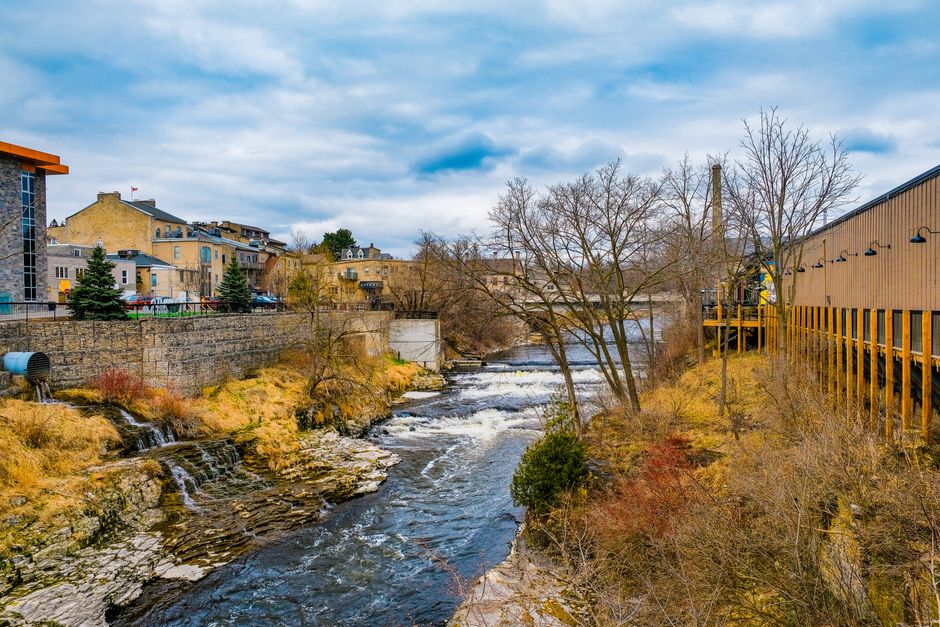
The Town of Renfrew has a population of approximately 8,000 and sits at the confluence of the Bonnechere River and the Muskrat River, about 50 kilometres south of Pembroke on Highway 17. Incorporated in 1858, it is one of Renfrew County's oldest municipalities — and that history is directly visible in the housing stock. The downtown core along Raglan Street and Renfrew Avenue contains Victorian commercial and residential buildings from the late 1800s, many still privately occupied as homes. These are 130-year-old structures, and they present a maintenance profile that is fundamentally different from anything built after 1940.
Renfrew has historically served as a commercial and services centre for the southern half of the county. Renfrew Victoria Hospital, schools, retail, and professional services draw from a broad rural catchment area encompassing McNab/Braeside, Admaston/Bromley, Horton, and Bromley townships. The town's economic function as a service centre has kept it more stable than many small Ontario municipalities of comparable size.
The water and sewer picture in Renfrew is mixed. The urban core is served by municipal water and sanitary sewer. Properties on the outskirts and in the rural sections surrounding the town — particularly along the Bonnechere River valley — are on private wells and septic systems. Additionally, some properties near the Bonnechere River sit within or proximate to the flood plain, which has implications for building permits, basement development, and property insurance.
Enbridge Gas natural gas distribution is available in portions of Renfrew town, but coverage is not complete — particularly in older and outlying areas. Many homes in Renfrew still heat with fuel oil or propane, making the Oil to Heat Pump Affordability Program one of the most relevant grant programs for this community.
Housing Stock and Common Issues
Renfrew's housing stock skews substantially older than Pembroke or Petawawa. The oldest properties in the downtown core date from the 1870s through 1900s. A dense belt of early 20th century (1900–1940) housing surrounds the downtown. Post-war suburban development from the 1950s through 1970s occupies higher ground north and south of the valley. Newer development from the 1990s through 2010s exists on the town's expanding edges.
Fieldstone and Early Brick Foundations
Pre-1920 homes in Renfrew frequently have fieldstone foundations with deteriorating lime mortar — foundations that are now 100 to 130 years old. The mortar has long since lost its waterproofing integrity, and water infiltration through the foundation wall is nearly universal in this housing stock. Interior waterproofing systems — a drainage channel at the footing, a sump pump, and a vapour barrier on the wall — are the practical solution for most. Exterior waterproofing (excavating around the foundation and applying a membrane) is more durable but substantially more expensive and disruptive.
Knob-and-Tube and Early Aluminum Wiring
Homes built in Renfrew before 1960 often still have knob-and-tube wiring or 60-amp fuse panels. Knob-and-tube wiring lacks a ground wire, is incompatible with modern three-prong devices, and cannot be buried under insulation (a fire hazard). Insurance companies across Ontario are increasingly non-renewing policies on homes with active knob-and-tube, or requiring remediation as a condition of renewal. A panel upgrade to 200-amp service with modern breakers resolves the insurance issue and creates capacity for modern loads. The work costs $3,500–$6,000 in Renfrew and should be near the top of the priority list for any pre-1960 home.
Bonnechere River Flood Plain
The Bonnechere River runs through the heart of Renfrew, and a meaningful portion of the town's older housing stock is near or within the regulated flood plain. The Rideau Valley Conservation Authority (RVCA) administers flood plain regulations for the Bonnechere watershed. Properties within the RVCA's regulated area require Conservation Authority approval for any development that could affect flood storage — this includes basement lowering, underpinning below certain grades, adding impermeable surfaces, and certain grading changes. Always confirm flood plain status with the RVCA before planning any renovation on a riverside Renfrew property.
Minimal or No Wall Insulation
Pre-1960 Renfrew homes typically have plaster-on-lathe walls with no insulation whatsoever. The wall assembly is often a single wythe of brick or a frame wall with nothing between the plaster and the exterior cladding. Adding wall insulation without disturbing exterior cladding requires either interior continuous insulation (adding an inch or two of rigid foam against the interior wall face, then new drywall) or exterior continuous insulation applied over the existing cladding. Both are significant projects but are eligible for Canada Greener Homes Loan financing, and both have meaningful payback at Renfrew's fuel oil and propane heating costs.
Aging Oil Heating Systems
Renfrew's location partially outside Enbridge's gas distribution network means many older homes heat with fuel oil. Oil furnaces have a service life of 20–30 years; oil storage tanks (buried or above-ground) have an expected life of 20–25 years. Both are approaching or past end-of-life on a substantial portion of Renfrew's pre-1980 housing stock. An improperly maintained or failed oil tank is not just a heating problem — it's an environmental liability. Soil contamination from a leaking above-ground or buried oil tank can cost $50,000–$200,000 in remediation and creates title complications at property sale.
Top Home Maintenance Priorities in Renfrew
Oil-to-Heat-Pump Conversion
Renfrew homeowners on fuel oil are paying among the highest heating costs per BTU in Ontario. The federal OHPA grant (up to $10,000) plus Canada Greener Homes Loan financing makes the economics of switching to a cold-climate heat pump compelling. Modern heat pumps operate efficiently to -25°C — well within Renfrew's winter range.
Attic and Wall Insulation
Pre-1960 Renfrew homes have near-zero insulation. Attic blown-in to R-49 is the first project; wall insulation (interior continuous or exterior continuous) follows. The Canada Greener Homes Loan finances both. At fuel oil prices, payback on a comprehensive insulation retrofit is 6–10 years — and the comfort improvement is immediate.
Basement Waterproofing
Fieldstone foundations and Bonnechere River flood plain proximity make basement moisture the most common home issue in Renfrew. Interior drainage systems with sump pumps are the standard intervention. For flood plain properties, assess with the RVCA before planning any below-grade work.
Electrical System Upgrade
Knob-and-tube wiring in Renfrew's oldest homes is creating insurance problems as underwriters tighten requirements. A documented panel upgrade or full rewire satisfies insurers and brings the home to modern capacity for heat pumps, EV chargers, and contemporary electrical loads.
Victorian Roofline Maintenance
Victorian Renfrew homes have complex rooflines — dormers, multiple valleys, ornate eaves — that collect debris and form ice. Annual cleaning of valleys and gutters plus flashing inspection around chimneys and penetrations prevents the water infiltration that destroys 130-year-old woodwork and plaster in ways that are expensive to reverse.
Contractor Access in Renfrew
Renfrew's contractor market draws from three directions: local Renfrew-based contractors, Pembroke contractors (50km north on Hwy 17), and Ottawa-area contractors who serve the eastern end of the Ottawa Valley corridor. This gives Renfrew homeowners a broader contractor pool than more isolated communities, though travel surcharges apply when drawing from Pembroke or Ottawa.
For heritage properties in Renfrew's older neighbourhoods, contractor experience with pre-1940 construction is essential — not optional. Century homes have plaster-on-lathe walls, horsehair mortar, old-growth timber framing, and non-standard dimensions that differ fundamentally from modern construction. An inexperienced contractor will either damage original fabric or significantly underestimate the scope of work. When requesting quotes for work on a pre-1940 Renfrew home, ask specifically about prior experience with similar-era construction and request references from comparable jobs.
Grants and Energy Programs for Renfrew Homeowners
- Canada Greener Homes Loan — Up to $40,000 interest-free. Deep energy retrofits on older Renfrew oil-heated homes are exactly the scenario this loan was designed for. Apply before work begins; requires EnerGuide pre-retrofit evaluation.
- Oil to Heat Pump Affordability Program (OHPA) — Up to $10,000 federal grant for switching from heating oil to a heat pump. Stackable with the Greener Homes Loan for maximum combined funding.
- HER+ (Enbridge Gas) — Available to Renfrew homeowners on Enbridge natural gas. Rebates for insulation, heat pumps, and windows up to $10,000.
- Accessibility Grants — Federal AAFP grants for ramps, grab bars, and barrier-free modifications. Renfrew's older Victorian two-storey housing stock creates significant demand for accessibility modifications from an aging population.
- HST Rebate — Substantial renovation projects on older Renfrew homes may qualify for the federal and Ontario HST new housing rebate when the scope meets the "substantial renovation" threshold.
Building Permits in Renfrew
Building permits for work within Renfrew town limits are issued by the Town of Renfrew Building and By-Law department at renfrew.ca. For projects within the Bonnechere River flood plain, the Rideau Valley Conservation Authority may require a separate permit in addition to the town building permit — both authorities must approve before work can legally proceed.
Projects in Renfrew that commonly require permits: structural changes (removing or adding walls), additions, basement finishing with new electrical or plumbing, decks over 600mm above grade, HVAC changes, and plumbing rough-in. See our Permit Portal guide for the full breakdown and contact information.
Home Services in Renfrew
- Insulation — Critical priority for Renfrew's pre-1960 housing stock; heritage-compatible methods required for some properties
- Roofing — Complex Victorian rooflines require experienced contractors; annual valley and flashing inspection
- Well Drilling — For properties on Renfrew's outskirts and in surrounding townships on private wells
- Septic Systems — Rural Renfrew-area properties on private septic
- Basement Waterproofing — Fieldstone foundation treatment, interior drainage, sump pump installation
- Foundation Repair — Structural assessment for century-old fieldstone and early brick foundations
- Electricians — Panel upgrades and rewiring for pre-1960 homes; ESA permits required
- Painting — Exterior maintenance on Victorian wood and brick cladding
- Snow Plowing — Commercial and residential contracts in town and surrounding area